Thirty-five workers at a talc mill in Three Forks, Montana, were locked out of their jobs by a massive global company. It was David v Goliath in a small town, and the blue collar workers would be going without income or employer health coverage while they stood their ground against the company. They wanted to return to their jobs and to the negotiating table. The company wanted to keep them locked out and wear them down until they each returned in desperation, one by one, and the union broke—but that’s not what happened.
To beat a massive multinational company in a tiny Montana town, you need to get the town on your side, get the media on your side, pull everyone’s heartstrings, and make it clear the company is the bad guy. These were hardworking men and women, and they didn’t choose to walk off the job—they literally showed up for work and discovered the gates were locked to them when contract negotiations came to a standstill.
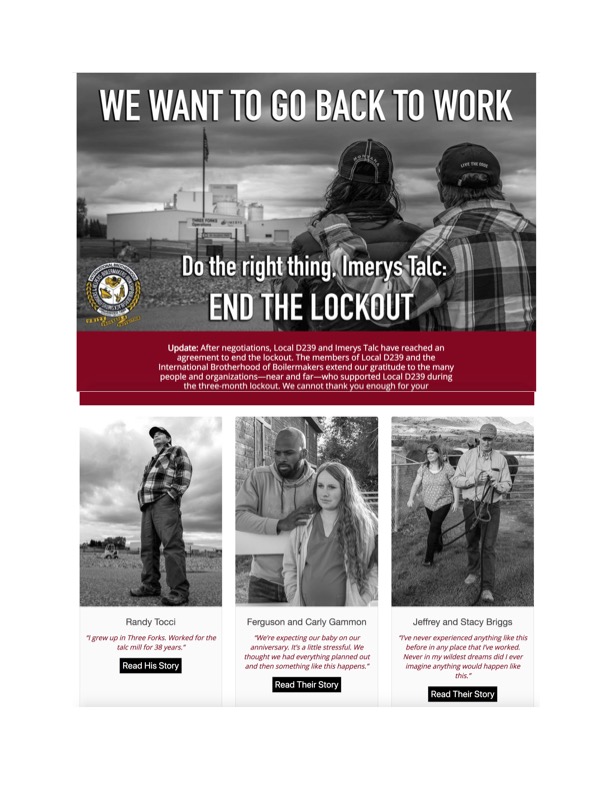
I went to Montana to tell find the stories that would strike the right chords. I found them. With Wide Awake Films capturing the story for a video, I left with content for a website, https://www.wewanttowork.org/, home base for a multifaceted campaign that included media relations; traditional TV, radio, print, and billboard ads, as well as digital ads (geofence and IP targeting) and social media.
Here’s the story I got from Ferguson and Carly Gammon:
Ferguson and Carly Gammon were excited about the job opportunity that would move them from Kansas City, Kansas, back to Carly’s hometown near Three Forks, Montana. Carly’s father, Jeffrey Briggs, had tipped Ferguson off about a job at Imerys Talc mill where he’s worked for the past 18 years.
When Ferguson got the job, the young couple was thrilled. They moved into the basement of Carly’s parents’ house to prepare to buy a home of their own — a home they would soon need, because they were expecting their first baby. Married just three years, everything seemed like it was a dream unfolding for the Gammons.
And then Imerys locked Ferguson and his father-in-law Jeffrey from their jobs. With the Gammons, and Carly’s parents — plus Carly’s four younger siblings and soon to be a newborn — all living under one roof, that’s a lot of uncertainty and financial hardship for one family to endure.
“We’re expecting our baby on our anniversary. I’m ready for the baby to be here,” says Carly. “It’s stressful. We thought we had everything planned out, and then something like this happens.”
“It’s kind of nerve-wracking for me,” Ferguson adds, noting that with only Carly working and no employer-provided healthcare, money is tight.
“I thought we were producing well, and we were making the company a lot of money. The guys there had incredible experience, and the work atmosphere was great. So I’ve been trying to figure out why.
“If I had a chance to talk to the head honchos from Imerys, I would say: We’re people out here. We’re families you’ve locked out. I say, let’s go back to the negotiating table and get something done that is both beneficial for the company and us. It can’t all be one-sided for us or for them.”
That was just one story. After the story section, the website included an area for visitors to add their names to “Stand with Local D239” (and share their email addresses with us). The growing list of names built an army I engaged for phone and email action to flood the company with “End the Lockout” messaging on designated days. The site also provided info on other ways to support the lockout and the impacted workers, as well as updated information, media coverage and letters of support.
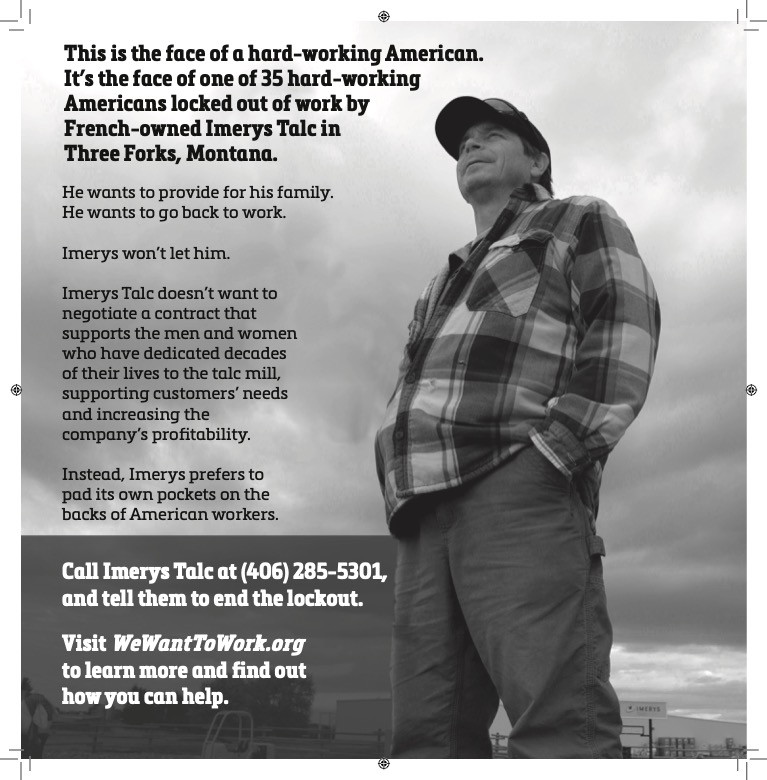
This is one of the print ads we ran. I wrote the copy and shot the image.
This is the :30 TV spot we ran.
And you can listen to the :30 radio spot. I wrote the copy, and that’s Randy Tocci’s voice. Randy was the local union’s president and was generous letting me use his story and voice.
And here is the obnoxious billboard that greeted the scab workers shuttled to and from the facility, as well as the managers. The digital ads are also below.
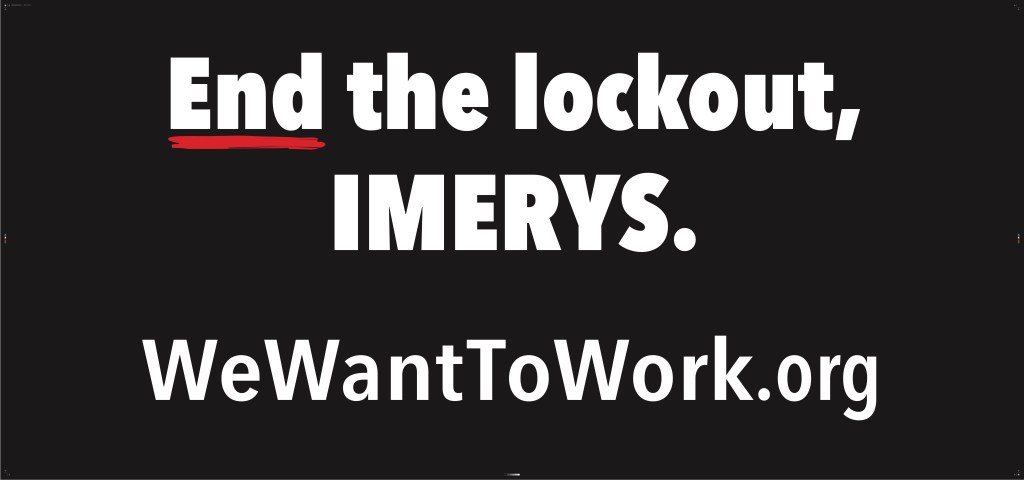
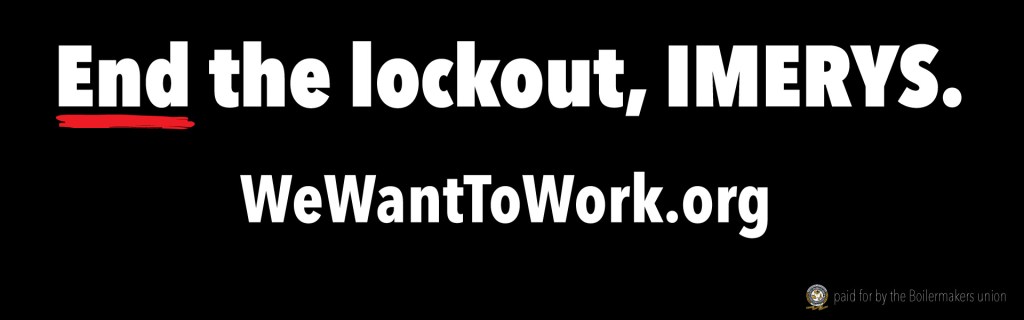
Simple, but effective.
This is the full video, produced by Wide Awake Films. I did some of the interviews.
It all worked. The community rallied behind the workers. The media coverage favored the workers. State big-shots like John Tester showed up at the picket line to support them.
I want to stress that there were a lot of important groups and people involved in helping Local D239 beat Goliath, including the Montana AFL-CIO, and especially the workers themselves, who faithfully walked a picket line every day, rain or shine, 24/7.
In the end, we won a Bronze Anvil from PRSA, but more importantly, the workers went back to work with a contract that was acceptable.
 Amy Martin